Accounting

Accounting

Prime-University-Accounting-Department (2)
Accounting

Undergraduate Programme Overview

Accounting as an undergraduate programme focuses on the systematic recording, analysis, interpretation, and reporting of financial transactions for individuals, businesses, and organizations. It equips students with technical knowledge in financial reporting, auditing, taxation, cost control, and corporate governance. The programme typically spans four years and leads to the award of a Bachelor of Science (B.Sc.) in Accounting.

Students take core courses such as financial accounting, management accounting, taxation, auditing, business law, corporate finance, financial management, public sector accounting, and accounting information systems. The goal is to prepare professionals who can provide accurate financial information, ensure regulatory compliance, support decision-making, and contribute to organizational transparency and sustainability.


Importance Across All Fields and Sectors

Accounting plays a fundamental role in the operation and integrity of both public and private sector institutions:

Corporate Sector: Manages company finances, budgeting, performance evaluation, and compliance with financial regulations.

Government and Public Sector: Supports public financial management, budget implementation, and accountability for public resources.

Banking and Financial Services: Helps in credit evaluation, investment planning, and financial risk assessment.

Audit and Assurance Services: Ensures accuracy and fairness in financial reporting through internal and external audits.

Taxation and Revenue Generation: Assists with tax compliance, planning, and advice for individuals and organizations.

Nonprofits and NGOs: Manages donor funds, prepares financial reports, and monitors project expenditures.

Entrepreneurship and SMEs: Guides business owners in bookkeeping, tax management, and financial decision-making.

Academia and Research: Provides insight into accounting theory, ethics, and emerging trends such as sustainability accounting and fintech integration.


Admission Requirements

For Accounting

O’Level Requirements (WAEC/NECO/NABTEB)
Candidates must obtain at least five (5) credit passes in the following subjects:

  • English Language
  • Mathematics
  • Economics
  • Any two of the following: Accounting, Commerce, Government, Business Studies, or Geography

Credits must be obtained at not more than two sittings.

UTME Subjects
Candidates must sit for and pass the following:

  • Mathematics
  • Economics
  • One other subject from Accounting, Commerce, or Government

Minimum UTME Score

  • Most universities require a UTME score of 180–200
  • Competitive institutions may require 220 or above

JAMB Subject Combination

  • Mathematics, Economics, and one other relevant subject (such as Accounting or Government)

Candidates applying for Direct Entry into 200 Level must have one of the following:

  • At least two A-Level passes in Accounting, Economics, or Business Management
  • ND/NCE with merit or upper credit in Accounting, Banking & Finance, or Business Administration
  • JUPEB/IJMB passes in relevant commercial subjects
  • Some universities conduct Post-UTME or screening exercises
  • A strong foundation in numeracy, business, and critical thinking is essential
  • Some institutions may accept Commerce or Government in place of Economics depending on their admission policy
  • Exposure to basic accounting software or financial literacy training is considered an added advantage
Faculty of
Science & Computing

Old Site of Capital Science Academy, Dafara Village, Kuje Area Council, FCT Abuja.

Do you have more questions?

Read our

City Campus: Plot 114, Cadastral Zone C20, Sector Centre F, Life Camp FCT, Abuja adjacent to Nizamiye Hospital

For Your Inquiries, Call us

Our Newsletter

Stay updated, receive updates right in your mailbox

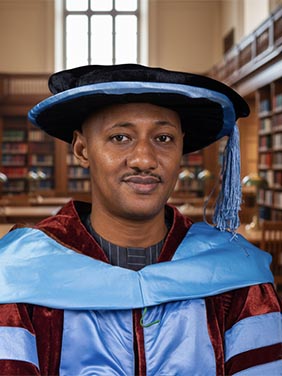
    Prime-University-Vice-Chancellor

    Professor Moussa Mahamat Boukar

    Vice Chancellor

    Professor Moussa Mahamat Boukar is a globally accomplished scholar of Computer Science. He was formerly the Dean, Faculty of Computing and Director of Distance Learning and Partnership Programs at Nile University Abuja. During his twelve year stint at Nile University, he also held several other major academic and administrative portfolios with considerable capacity and diligence. A citizen of Chad Republic, Nigeria’s sister neighbour to the north eastern flank, Professor Boukar is one of Africa’s leading scholars of Computer Science. An eminently renowned researcher and administrator, he served in many other top leadership positions in various institutions and organizations around the world.

    His education traverses North America, Central Asia and the former Soviet Union. He holds a PhD in Computer Science from International Black Sea University, Georgia, an MSc from International Ala-Too University, Bishkek in Kyrgyzstan, and a BSc in Computer Engineering from the University of Toronto, Canada.

    Professor Boukar has authored over 70 research papers published in leading international journals indexed by Scopus and SCI, and has written two influential books. His award-winning research has been presented at 45 international conferences, which earned him 23 prestigious recognitions for its groundbreaking record.

    Professor Boukar joins Prime University at a critical juncture in the institution’s foundation years. He is poised to provide the needed leadership, direction and guidance, which are critical in propelling the university towards realising it’s vision of preparing global citizens, who would graduate as professionals, statesmen and business leaders.

    His leadership era at Prime University is being anchored on five strategic goals namely: 1. The pursuit of Academic Excellence, 2. Driving Innovation and Research, 3. Propelling Students Enrollment and Institutional Growth, 4. Offering Ethical and Inclusive Leadership as well as 5. Strategic Collaboration and Global Visibility. In achieving these institutional goals, Professor Boukar said he will “continually LISTEN, cautiously LEARN and painstakingly LEAD, which he strongly believes are the three key and mutually inclusive success factors in any competitive and sustainable institutional or organisational stewardship.